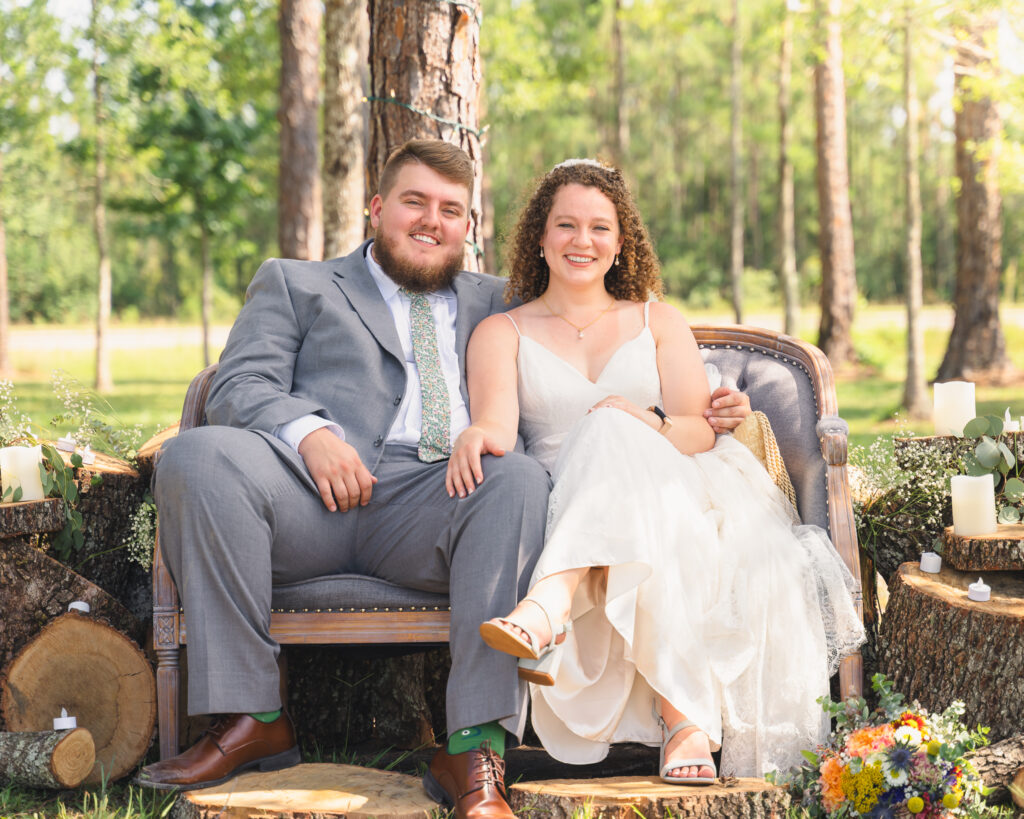
How Do You Create a Wedding Day Timeline in Mississippi?
To create a Mississippi wedding day timeline, you need to start with your venue, ceremony time, photo priorities and reception end time, then build the rest of the day around those main anchor points.
Creating a good wedding timeline for photography is a lot like making an itinerary for your dream vacation.
Without it, it’s easy to feel overwhelmed once the day starts moving. With it, you can confidently prioritize the moments that matter most to you and make room for more of the things you actually want to enjoy.
You want to be able to relax into your wedding day and actually enjoy it as it happens.
Weddings move fast. There are a lot of people, a lot of emotions, a lot of moving parts and a lot of decisions happening at once. That’s why there’s an entire industry of wedding vendors whose job is to help you relax and enjoy a once in a lifetime experience with the people you love most.
Here’s the truth: you probably can’t do everything.
Most couples say their wedding day went by too fast. Years later, it’s common to look back and wish there had been more time for certain photos.
“I wish we would have gotten more pictures of just us together.”
“I wish we would have done a grand exit.”
“I wish we had more photos with our bridesmaids or groomsmen.”
“I wish we had planned more time for family pictures.”
A lot of those regrets can be avoided with a little foresight, a good timeline and the right help.
As wedding photographers based in Clinton, MS and serving Jackson, Central Mississippi and the surrounding areas, we help couples think through wedding day timelines all the time. Mississippi weddings come with their own unique things to plan around, like summer heat, outdoor ceremonies, sunset timing, church restrictions, reception travel and family photo lists that can get long fast.
In this guide, we’ll walk through how to build a wedding day timeline that works well for your photos, your vendors and your actual experience of the day.
And if you book with Magnolia Garden Photography, your timeline is one of the things we’ll help you build together.
In This Mississippi Wedding Timeline Guide
- Why does your wedding day timeline matter for photos?
- What should you do first when planning your wedding timeline?
- When should you hire a wedding planner and photographer?
- When should you choose your wedding ceremony time?
- How should Mississippi weather affect your wedding timeline?
- How long should your wedding ceremony be?
- When should your wedding reception end?
- How long should cocktail hour be?
- How much time should you plan for dinner?
- When should you do first dances, speeches and cake cutting?
- When should you take sunset wedding portraits in Mississippi?
- How much time should you plan for open dancing and a grand exit?
- Should you do a first look on your wedding day?
- How much time should you plan for getting ready photos?
- What does an 8-hour wedding timeline with a first look look like?
- What does an 8-hour wedding timeline without a first look look like?
- How much wedding photography coverage do you need?
- Wedding timeline FAQs
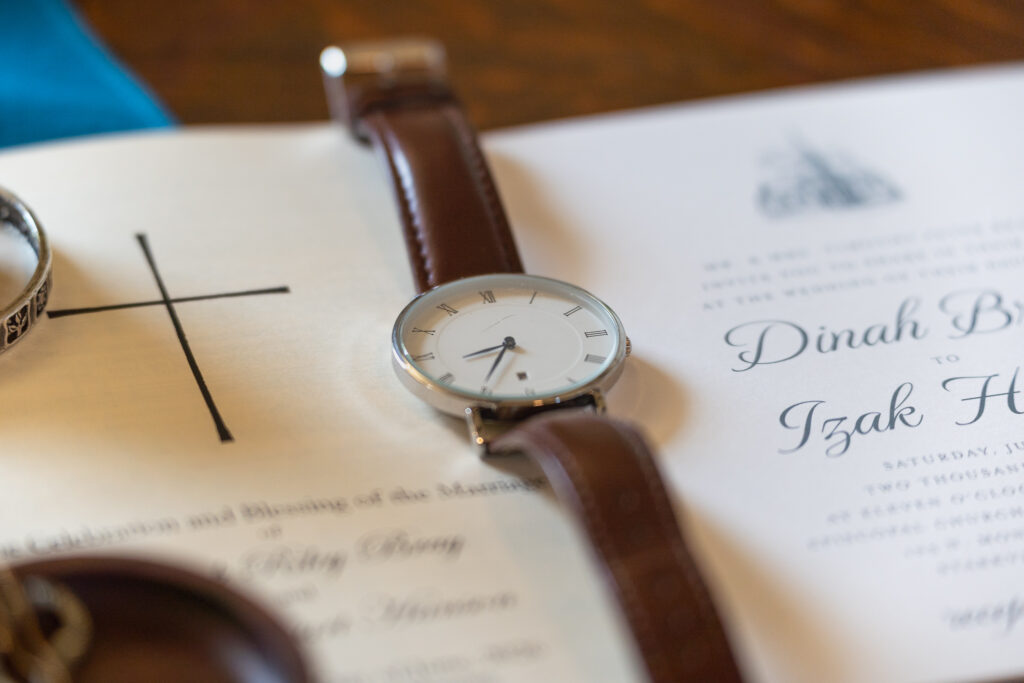
Why Does Your Wedding Day Timeline Matter for Photos?
Your wedding day timeline matters because it determines how relaxed you feel, how many important photo moments are protected and how smoothly the day flows from one part to the next.
Your timeline is about more than just keeping everyone on schedule.
It affects how much time you get with your guests, how much time you have for portraits, whether your family photos feel rushed and whether your photographer has enough time to capture the details you care about.
A good wedding timeline helps answer questions like:
- When should hair and makeup start?
- Should we do a first look?
- How much time do we need for family photos?
- When should the ceremony begin?
- When should we take sunset portraits?
- How long should dinner take?
- When should we do cake cutting, first dances and speeches?
- How much time do we need for open dancing?
- Will we have enough coverage for a grand exit?
You don’t need to have every single answer right away, but you do need a plan. A good timeline gives your day enough structure that you can relax inside of it instead of feeling rushed.
What Should You Do First When Planning Your Wedding Timeline?
The first thing you should do when planning your wedding timeline is choose your venue, because your venue determines how much time you actually have on the property.
Before you can build a realistic wedding day timeline, you need to know where the day is happening.
There are a lot of great wedding venues in the Jackson, MS area and across Central Mississippi, but every venue is different. Some venues have strict arrival and exit times. Some allow access all day. Some may host more than one event in the same day. Others may require everything to be cleaned up by a certain time.
That matters because your venue determines the baseline for the whole day.
Before you finalize your timeline, ask your venue:
- What time can we arrive?
- What time do we have to leave?
- Is there a separate getting ready space?
- Can we take photos indoors if it rains?
- Are there shaded areas for outdoor portraits?
- Are there restrictions around sparkler exits?
- Will another event be happening before or after ours?
- How early can vendors arrive?
If you fall in love with a venue but their time window does not fit your plans, that does not automatically mean you have to choose a different venue. You may be able to get ready somewhere else, have your reception off site or create a timeline that uses the space more efficiently.
Once your venue is chosen, your biggest timeline constraint is set. From there, the rest of the day becomes much easier to build.
When Should You Hire a Wedding Planner and Photographer?
You should hire your wedding planner and photographer early in the planning process because both vendors can help you build a realistic timeline before the day gets too packed.
Most couples have never planned a wedding before. For a lot of people, this is also their first time being in a wedding day timeline from the bride and groom’s perspective.
That’s why experienced vendors matter.
A wedding planner can help with the full flow of the day, vendor communication, setup, cleanup, transportation, ceremony logistics and all the little behind the scenes things you may not think about.
A wedding photographer can help you understand how much time is needed for the photos you actually want.
Planners and photographers usually work together throughout the wedding day. Your planner may build the full master timeline, while your photographer helps shape the photo portion of the timeline so portraits, family photos, details and candid moments are not rushed.
We highly recommend hiring a planner if your budget allows for it.
If you do not hire a planner, your photographer can still help you build a photo-friendly wedding timeline. It may not cover every single vendor detail, but it can at least help make sure the important photo moments have enough time.
When Should You Choose Your Wedding Ceremony Time?
You should choose your wedding ceremony time early because the ceremony becomes the anchor point for the entire wedding day timeline.
Once you know when the ceremony starts, you can work backward to plan getting ready, first looks, pre-ceremony portraits and vendor arrival times. You can also work forward to plan cocktail hour, dinner, sunset portraits, dancing and your exit.
This is also the part of the day your guests need to plan around. They may need to request time off work, drive in from another city, book a hotel or arrange childcare.
The sooner you can choose your ceremony time, the better.
You do not have to finalize every detail right away, but your final timeline should ideally be nailed down about one month before the wedding. That gives your vendors enough time to confirm arrival times, coverage needs and final logistics.
How Should Mississippi Weather Affect Your Wedding Timeline?
Mississippi weather should affect your wedding timeline by helping you decide when to have your ceremony, when to take portraits and how much comfort you need to plan for your guests.
If you’re getting married outdoors in Central Mississippi, weather needs to be part of the timeline conversation.
Mississippi summers can be hot, humid and buggy. Sometimes it’s just uncomfortable. Other times, extreme heat can be genuinely hard on guests, vendors and the wedding party.
That does not mean an outdoor ceremony is a bad idea. It just means you need to plan for it.
For summer weddings in Mississippi, a later ceremony can sometimes make more sense. For example, a 6:00 p.m. outdoor ceremony may still give you plenty of light, while avoiding the hottest part of the afternoon.
If you are planning an outdoor ceremony, consider:
- Choosing a shaded ceremony spot
- Providing fans or water for guests
- Avoiding the hottest part of the day
- Having a rain plan
- Making sure elderly guests are comfortable
- Planning portraits around the best light
The more comfortable everyone is, the better the day will feel.
How Long Should Your Wedding Ceremony Be?
Your wedding ceremony length depends on your traditions, faith, vows and personal preferences, but many ceremonies last around 20 to 45 minutes, while some religious ceremonies can last an hour or longer.
Not every ceremony takes the same amount of time.
Some couples have a shorter ceremony with vows, rings and a kiss. Others include worship songs, a sermon, communion, traditional vows, special readings or other meaningful religious elements.
Both are completely fine.
You just need to be honest about how long your ceremony will actually take.
A shorter ceremony may last around 20 to 30 minutes. A more traditional or religious ceremony may last 45 minutes to an hour or more.
This matters because it affects everything that happens after the ceremony. If your ceremony runs long, that can shorten family photo time, sunset portraits, cocktail hour or dinner.
When in doubt, ask your officiant how long the ceremony usually takes and add a small buffer.
When Should Your Wedding Reception End?
Your wedding reception should end based on your venue rules, photography coverage, exit plans and how long you actually want to celebrate with your guests.
Before you fill in every reception detail, think about when you want the night to end.
Are you someone who wants to dance for hours? Or would you rather have a shorter reception and leave while the night still feels lively?
There is not one right answer here. This is something you and your spouse should talk through together.
A few things to consider:
- How long do you want photography coverage?
- Do you want a grand exit photographed?
- How late can your venue stay open?
- How long will your DJ or band be booked?
- Do you want older guests to still be there for the exit?
- Are you leaving for a honeymoon right after the wedding?
One thing to keep in mind: the earlier your reception ends, the more guests will usually still be present for a sparkler exit or grand exit.
If the exit happens very late, some guests may have already left.
How Long Should Cocktail Hour Be?
Cocktail hour should usually be around one hour, but you may need more or less time depending on family photos, travel between locations and whether you did a first look before the ceremony.
Cocktail hour usually happens right after the ceremony.
This is when guests grab drinks, appetizers, mingle and wait for the reception to officially begin. It’s also when family photos, wedding party photos and bride and groom portraits often happen.
Before setting cocktail hour, ask:
- Is cocktail hour at the same location as the ceremony?
- Will guests need to drive somewhere else?
- Will family photos happen before or after the ceremony?
- Are you doing a first look?
- How many family photo combinations do you want?
- Will you need transportation time?
If cocktail hour is 30 minutes away and your ceremony ends at 5:00 p.m., you’ll need to account for portraits and travel. That means your guests may arrive at cocktail hour before you and your immediate family do.
If cocktail hour is in the same place as the ceremony, things are usually easier. Family members can go enjoy cocktail hour as soon as their photos are finished. If someone forgets they are needed for family portraits, someone can quickly grab them nearby.
That is much harder if cocktail hour is off site.
As a general rule, plan at least 30 minutes after the ceremony for family photos and a few portraits. If you have a larger family list, a big wedding party or no first look, you may need more time.
How Much Time Should You Plan for Dinner?
You should usually plan about one hour for dinner, but your guest count, meal style and reception traditions can make dinner shorter or longer.
Dinner usually comes after cocktail hour, but the length of dinner can vary.
Three things affect how long dinner takes:
Guest count. The more guests you have, the longer it will take for everyone to get food. A buffet for 50 people will usually move faster than a buffet for 200 people.
Meal style. A simple buffet may move quickly. A plated dinner or multi-course meal may take longer, especially if guests are served individually.
Traditions or prayer. Many Christian weddings include a prayer before dinner. Some families may also include a welcome speech or blessing. Those are meaningful moments, but they still need a place on the timeline.
Most people do not love being photographed while they eat, so dinner is also a good time for your photographer and videographer to take a short break, back up gear if needed and refuel.
If you want coverage during dinner, that can be planned. But most of the time, the best photo moments happen before dinner starts or once the reception events begin again.
When Should You Do First Dances, Speeches and Cake Cutting?
You should place first dances, speeches and cake cutting around dinner in a way that keeps the reception moving and makes it easy for guests to follow what is happening.
Once you have dinner roughly planned, you can decide where to place the main reception events.
These may include:
- Grand entrance
- First dance
- Parent dances
- Welcome speech
- Blessing or prayer
- Toasts
- Cake cutting
- Shoe game
- Garter toss
- Bouquet toss
- Open dancing
There are several ways to structure this.
Some couples do a grand entrance and go straight into the first dance. Others do the cake cutting right after the entrance so the cake can be served during dinner. Some couples wait until after dinner for speeches and dances.
The cake cutting is one of the most flexible parts of the reception. It usually does not take long, but it is a sweet moment between the bride and groom and it photographs well.
You can place cake cutting:
- Right after the grand entrance
- During dinner
- After speeches
- Right before open dancing
If you want the reception to feel smooth, try not to spread formalities too far apart. When events are scattered randomly through the night, it can be harder for guests to know what is happening and harder for vendors to stay ready.
When Should You Take Sunset Wedding Portraits in Mississippi?
You should take sunset wedding portraits in Mississippi during the last hour before sunset if possible, because that is usually when the light is softer, warmer and more flattering.
Sunset portraits are one of the most important parts of a photo-friendly wedding timeline.
This is usually a chance for the bride and groom to step away from the crowd for a few minutes, breathe and enjoy being married.
You do not always need a huge amount of time. Even 10 to 20 minutes can make a big difference.
Sunset portraits often happen close to dinner, speeches or reception events, so you’ll want to work with your photographer, planner and caterer to choose the best time to slip away.
For a Mississippi wedding, this is especially worth planning because the light can be beautiful in the evening, but it disappears quickly once the sun starts going down.
A simple way to plan for this is to build a 15-minute portrait window into the reception timeline. That way, it does not feel like you are randomly leaving the reception. It is already part of the plan.
How Much Time Should You Plan for Open Dancing and a Grand Exit?
You should plan at least 45 minutes to an hour for open dancing if you want reception dance floor photos, and you should make sure your photography coverage lasts through the grand exit if that moment matters to you.
After dinner and formal reception events, open dancing usually begins.
This is the part of the night where guests relax, the DJ turns up the music and everyone gets to celebrate with the bride and groom.
Open dancing can last 45 minutes, an hour, two hours or longer depending on the kind of reception you want.
If you are planning a sparkler exit, private last dance or getaway car exit, make sure your photographer’s coverage lasts long enough to capture it.
A common reception flow may look like this:
- Dinner
- Toasts
- Cake cutting
- First dances
- Open dancing
- Private last dance
- Sparkler exit
If you care about exit photos, do not leave it as an afterthought. Put it on the timeline early.
Should You Do a First Look on Your Wedding Day?
You should do a first look if you want a private moment together before the ceremony and more flexibility for portraits, but you can skip it if seeing each other at the altar feels more meaningful to you.
Once the ceremony and reception are planned, you can work backward into the getting ready portion of the day.
This is where the first look comes in.
A first look is when the groom sees the bride before the ceremony, usually in a private or semi-private setting. Some couples love this because it gives them a quiet moment together before the day gets busy. Other couples prefer to see each other for the first time at the altar.
Both choices are perfectly fine.
From a timeline perspective, a first look can be helpful because it allows you to take some portraits before the ceremony. That can include bride and groom portraits, wedding party photos and sometimes immediate family photos.
This can shorten the amount of photo time needed after the ceremony.
If you choose to do a first look, plan at least 15 minutes for the first look itself. If you want portraits afterward, plan more time.
You can also do first looks with:
- Dad
- Mom
- Grandparents
- Bridesmaids
- Groomsmen
Just remember that every first look takes time. They are meaningful, but they need to be planned intentionally.
For a deeper breakdown, you can read our full guide on first looks here: [Should You Do a First Look on Your Wedding Day?]
How Much Time Should You Plan for Getting Ready Photos?
You should plan at least 3 to 4 hours for the getting ready portion of the day so hair, makeup, detail photos, dress photos and first looks do not feel rushed.
Getting ready is one of the easiest parts of the day to underestimate.
If hair and makeup run late, everything after that can get squeezed. That can affect first looks, wedding party photos, family photos and even the ceremony start time.
That does not mean your photographer has to be there the entire time. It just means the morning itself needs space.
A good getting ready timeline allows time for:
- Hair and makeup
- Detail photos
- Bridesmaids getting dressed
- Bride getting into her dress
- Mom or maid of honor helping with the dress
- Groom getting ready photos
- Letter reading or gift exchange
- Bride portraits
- Bridesmaid photos
- First looks
If you want your photographer to capture details, have everything gathered in one place before they arrive. This may include:
- Rings
- Invitation suite
- Shoes
- Dress
- Veil
- Jewelry
- Perfume
- Vow books
- Bouquet
- Special family heirlooms
A little preparation here makes the morning feel much less stressful.
What Does an 8-Hour Wedding Timeline With a First Look Look Like?
An 8-hour wedding timeline with a first look usually starts with getting ready photos, moves into the first look and portraits before the ceremony, then leaves more breathing room after the ceremony for family photos and the reception.
Here’s a simple example of an 8-hour wedding photography timeline with a first look. This is not the only way to plan a wedding day, but it gives you a starting point.
Sample 8-Hour Mississippi Wedding Day Timeline With First Look
- 1:00 p.m. Photographer arrives, detail photos begin
- 1:30 p.m. Getting ready candids
- 2:00 p.m. Bride gets into dress
- 2:30 p.m. First look with bride and groom
- 2:50 p.m. Bride and groom portraits
- 3:20 p.m. Wedding party photos
- 4:00 p.m. Immediate family photos
- 4:30 p.m. Hide away before ceremony
- 5:00 p.m. Ceremony begins
- 5:30 p.m. Ceremony ends
- 5:40 p.m. Extended family photos
- 6:00 p.m. Cocktail hour continues, reception details photographed
- 6:30 p.m. Grand entrance and dinner
- 7:15 p.m. Toasts and cake cutting
- 7:45 p.m. Sunset portraits
- 8:05 p.m. First dances
- 8:30 p.m. Open dancing
- 9:00 p.m. Photo coverage ends
This works well because many of the formal photos are finished before the ceremony. After the ceremony, you only need a shorter family photo list before moving into the reception.
What Does an 8-Hour Wedding Timeline Without a First Look Look Like?
An 8-hour wedding timeline without a first look usually puts more portraits after the ceremony, which means you need to protect enough time before the reception begins.
If you do not want a first look, your timeline can still work beautifully. You just need to plan more portrait time after the ceremony.
Sample 8-Hour Wedding Timeline Without First Look
- 1:00 p.m. Photographer arrives, detail photos begin
- 1:30 p.m. Getting ready candids
- 2:00 p.m. Bride gets into dress
- 2:30 p.m. Bride portraits and bridesmaid photos
- 3:00 p.m. Groom portraits and groomsmen photos
- 3:30 p.m. Immediate family photos separately
- 4:15 p.m. Hide away before ceremony
- 5:00 p.m. Ceremony begins
- 5:30 p.m. Ceremony ends
- 5:40 p.m. Full family photos
- 6:05 p.m. Full wedding party photos
- 6:25 p.m. Bride and groom portraits
- 6:45 p.m. Reception entrance
- 7:00 p.m. Dinner
- 7:45 p.m. Toasts and cake cutting
- 8:15 p.m. First dances
- 8:30 p.m. Open dancing
- 9:00 p.m. Photo coverage ends
This timeline can work, but the portrait window after the ceremony is tighter. If you have a large family list or a big wedding party, you may want more coverage or an earlier ceremony time.
How Much Wedding Photography Coverage Do You Need?
You need enough wedding photography coverage to document the parts of the day you care about most, which usually puts couples somewhere between 6 and 10 hours. Visit our pricing page for more details about those specific packages.
The amount of coverage you need depends on what you want photographed. Here’s a simple way to think about it:
6 hours of coverage. This can work for smaller weddings, shorter receptions or couples who do not need a lot of getting ready coverage or reception dancing.
8 hours of coverage. This is usually a good fit for a traditional wedding day with getting ready, ceremony, family photos, reception events and some dancing.
10 hours of coverage. This is helpful for larger weddings, multiple locations, longer ceremonies, big wedding parties, travel between venues or couples who want the full story from getting ready through the exit.
If you are not sure how much coverage you need, the timeline will usually make it clear.
Planning your own wedding timeline? If you’re getting married in Clinton, Jackson or anywhere in Central Mississippi, we’d be happy to help you think through what photo coverage makes the most sense for your day. [Reach out here and tell us what you’re planning.]
Wedding Timeline FAQs
How far in advance should our wedding day timeline be finalized?
Your wedding day timeline should be finalized about one month before the wedding so your photographer, planner and other vendors have time to confirm arrival times and logistics.
You can absolutely start with a rough timeline earlier than that. In fact, you probably should. But the final version should be shared with your vendors once the major details are locked in.
Do we need a first look?
You do not need a first look, but it can make your wedding day timeline easier if you want more portraits before the ceremony.
A first look gives you more flexibility for bride and groom portraits, wedding party photos and sometimes family photos before guests arrive. Skipping the first look is also completely fine. You just need to plan more portrait time after the ceremony.
How much time should we plan for family photos?
You should plan at least 30 minutes for family photos, but larger families or longer shot lists may need more time.
Family photos usually move faster when the list is planned ahead of time and everyone knows where to be. If you have a lot of extended family combinations, tell your photographer early so they can help you plan enough time.
What time should we have our wedding ceremony in Mississippi?
For an outdoor Mississippi wedding, late afternoon or early evening is usually a good ceremony time because it can help you avoid the hottest part of the day while still leaving enough light for portraits.
A 5:00 or 6:00 p.m. ceremony can work well for many summer weddings, but the best time depends on your venue, sunset time, ceremony length and reception plans.
When is the best time for sunset wedding portraits in Mississippi?
The best time for sunset wedding portraits in Mississippi is usually during the last hour before sunset.
You do not need a huge portrait window, but 10 to 20 minutes during that softer evening light can make a big difference in your bride and groom portraits.
How much wedding photography coverage do we need?
Most couples need 6 to 10 hours of wedding photography coverage depending on the size of the wedding, number of locations, reception length and whether they want getting ready photos or exit photos.
If you want the full story from getting ready through the reception, 8 to 10 hours usually gives you more room to breathe. If your wedding is smaller or more simple, 6 hours may be enough.
What should we send our wedding photographer before the wedding?
You should send your wedding photographer your timeline, family photo list, ceremony rules, important details and any special moments you want photographed.
The more your photographer knows ahead of time, the easier it is to capture the moments that matter most without making the day feel stressful.
Should You Send Your Timeline to Your Wedding Photographer?
Yes, you should send your wedding timeline to your photographer as soon as you have a rough version, because they can help you spot anything that feels too tight, missing or unrealistic.
You do not have to have everything perfect before asking for help. A good photographer can look at your plan and help you think through photo timing, family portraits, sunset portraits, travel, ceremony rules and coverage needs.
At Magnolia Garden Photography, we help our couples think through the flow of the day so they can feel relaxed, prepared and present. We want your wedding day to feel like something you get to enjoy, not something you have to survive.
If you’re planning a wedding in Clinton, Jackson or anywhere in Central Mississippi, we’d love to help you create a timeline that gives you room for the moments that matter most.
[Reach out to Magnolia Garden Photography here] and tell us about your wedding day.]
Pingback: Should You Do a First Look on Your Wedding Day? | Jackson MS Wedding Photographer